From Awareness to Ownership: How IHP's WASH Programme is Advancing Public Health Across Pakistan
Ask any public health practitioner, what makes an intervention last long after the project ends, and the answer rarely has anything to do with how many people were reached. It has to do with what happens after the outreach team leaves.
Across Punjab, Sindh, Khyber Pakhtunkhwa, Balochistan, Azad Jammu & Kashmir, and Gilgit-Baltistan, Islamic Help Pakistan's WASH (Water, Sanitation and Hygiene) Programme is built on this understanding. Clean water access, safe sanitation, and good hygiene are not simply delivered to communities. They are built with them, step by step, until communities themselves become the custodians of their own public health.
This is the story of how IHP's WASH Programme moves communities from awareness to ownership, and why that journey matters for public health in Pakistan's most underserved districts.
Why Reaching Communities Is Not Enough
Public health programmes often measure success by counting how many people were reached through water facilities, messages, training sessions, awareness campaigns, and community outreach activities. These numbers matter, but they do not always translate into lasting behaviour change or sustainable community ownership.
Despite genuine investment in communication and service delivery, many health interventions struggle to sustain their impact once external support is reduced. The challenge is rarely the quality of the services or information delivered. More often, it lies in how participation itself is understood.
Too often, participation is treated as the same thing as awareness. IHP's WASH Programme treats it as a progression, one that transforms communities from passive recipients of information into active owners of their own solutions.
The Participation Continuum: A Framework for Sustainable Public Health
IHP's approach to WASH programming is guided by a clear framework for sustainable public health change: the Participation Continuum.
Assessment, Sensitization, Awareness, Engagement, Mobilization, Organization, Empowerment, Ownership, Sustainability.
Each stage builds on the one before it. Skip a stage, and the foundation for lasting change weakens. Follow it through, and a community does not just receive a water system. It becomes responsible for protecting its own health for years to come.
Here is how this framework shapes IHP's WASH interventions on the ground.
Assessment: Understanding Community Realities First
Every WASH intervention begins with understanding, not building. Before a hand pump is installed or a hygiene session is planned, IHP's teams work to understand community water sources, quality of water already in use, existing sanitation practices, social norms, concerns, and the capacities already present within the community.
This groundwork ensures that every intervention that follows, whether it is a solar-powered water supply system or a gravity-based scheme, responds to what a community genuinely needs rather than what is assumed on its behalf.
Sensitization and Awareness: Helping Communities See the Risk, and the Solution
Communities are unlikely to change long-standing habits around water use, sanitation, or hygiene unless they first recognise how these issues affect their own families. Sensitization helps communities see that unsafe water and poor sanitation are relevant to their daily lives, not distant or abstract concerns.
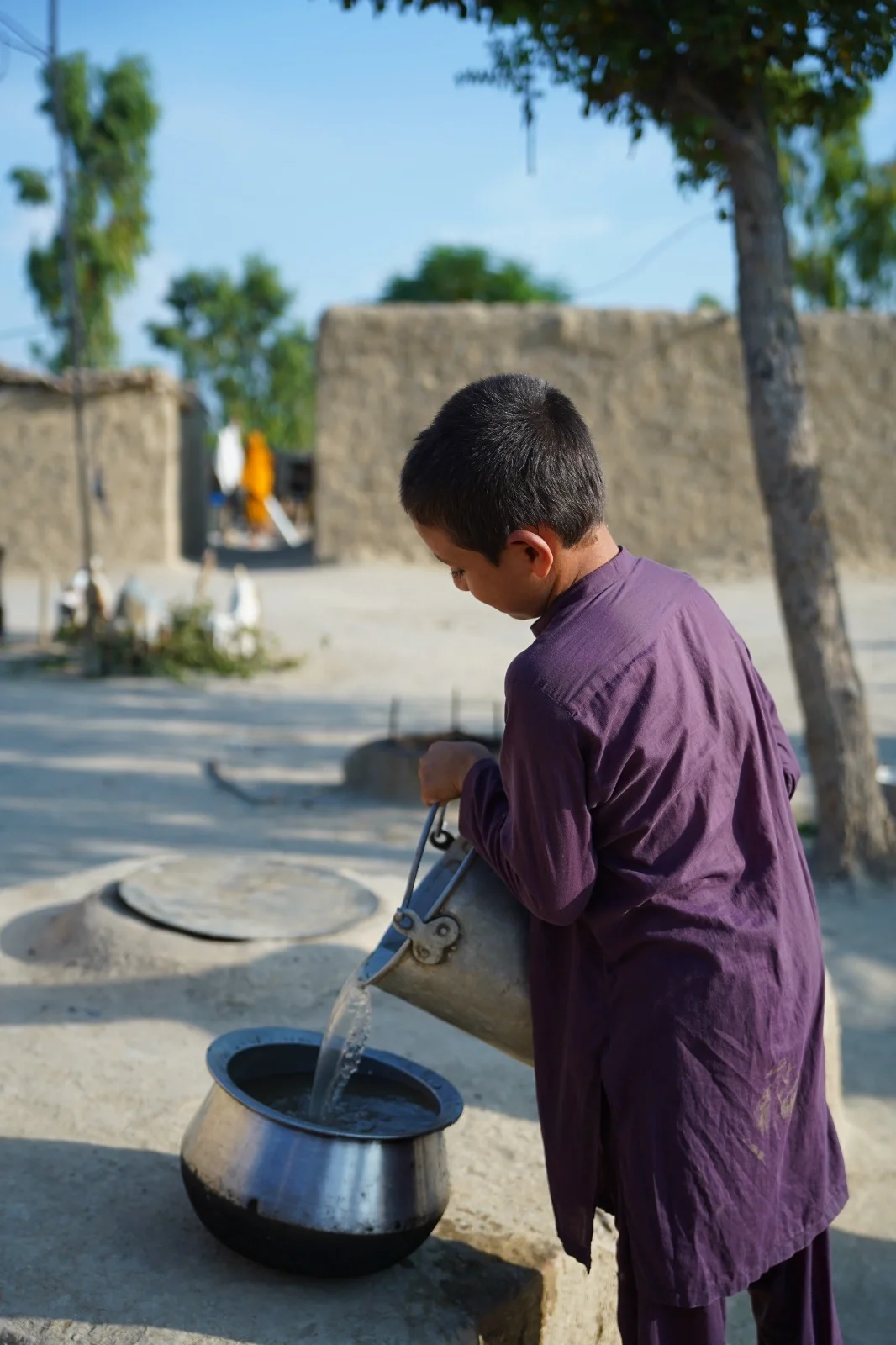
From there, awareness activities build understanding, helping people learn about the risks of unsafe water and poor hygiene, and about the practices and services available to protect against them. Hygiene promotion sits at the centre of this stage, turning knowledge into everyday practices such as safe water handling and handwashing.
Engagement: Building Two-Way Trust Before Building Infrastructure
Participation cannot move in one direction only. IHP's WASH Programme creates space for dialogue, involving community members in conversations about their own water and sanitation needs rather than simply delivering messages or infrastructure to them.
This engagement builds the trust that communities will later rely on when they take responsibility for the systems installed in their villages.
Mobilization: Turning Understanding into Water, Sanitation and Hygiene Infrastructure
Once communities are engaged, mobilization turns understanding into collective action, through the involvement of community leaders, volunteers, and members working alongside IHP's technical teams. This is the stage where IHP's core WASH interventions take shape on the ground, including:
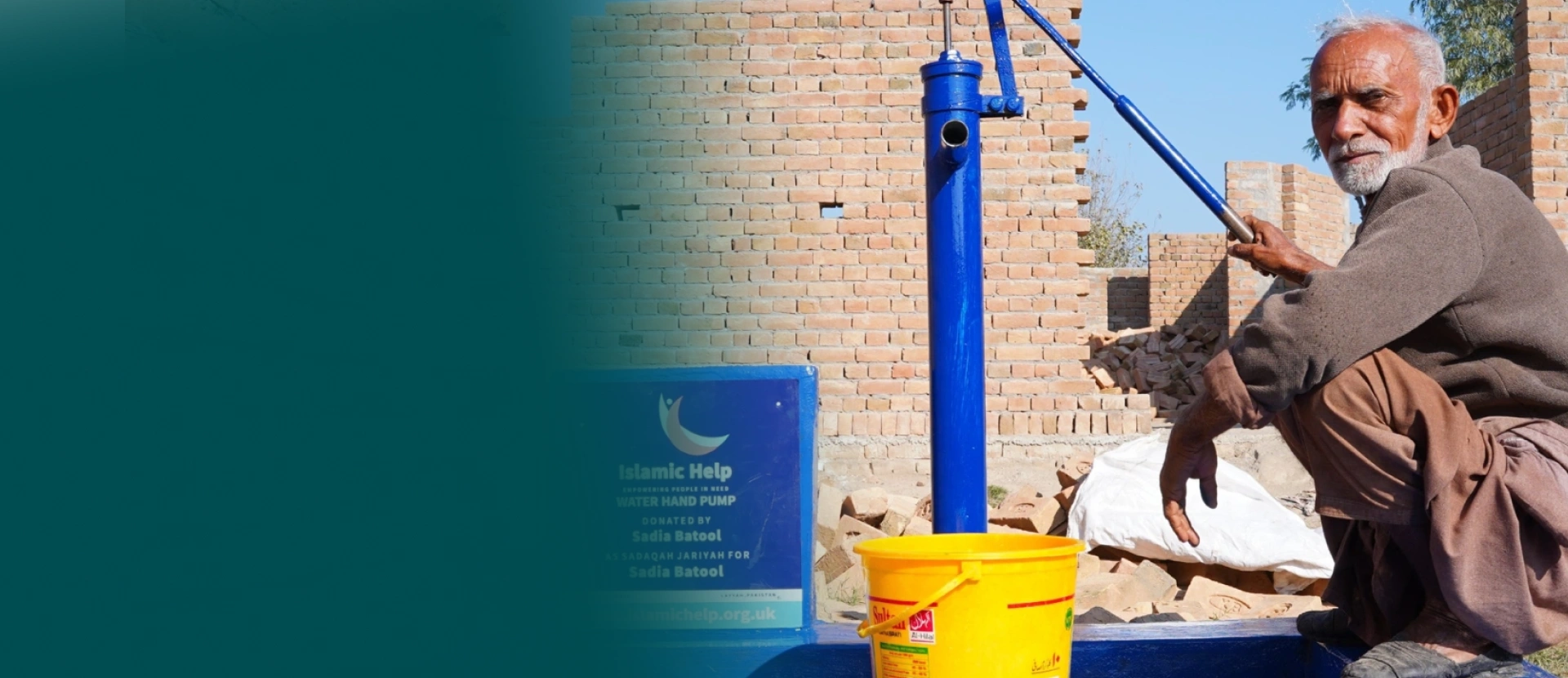
- •Water hand pumps and wells, providing safe drinking water at the community level
- •Solar-powered water supply systems, delivering sustainable access in areas without reliable electricity
- •Gravity-based water supply schemes, serving communities in hilly and mountainous terrain
- •Community water collection points, designed for shared and equitable access
- •Ultra-filtration (UF) and Reverse Osmosis (RO) plants, treating water to safe drinking standards
- •Hygiene promotion activities, reinforcing safe practices alongside new infrastructure
Together, these interventions form the physical backbone of IHP's contribution to public health in underserved communities.
Organization: Community Water Usage Committees and Hygiene Promotion Committees
Infrastructure alone does not guarantee sustainability. This is why IHP organizes communities into structures that can carry responsibility forward long after installation is complete.
Community Water Usage Committees (CWUCs) are formed to oversee the use, maintenance, and fair distribution of water infrastructure at the community level. Hygiene Promotion Committees (HPCs) support the continuation of hygiene behaviour change, keeping safe practices alive long after formal sessions have ended.
These committees are not symbolic. They give communities the organizational continuity, accountability, and oversight needed to protect the investment made in their own public health.
Empowerment and Ownership: Communities Leading Their Own Water Security
As committees gain experience, IHP builds their capacity further, equipping them with the skills, IEC materials, confidence, and authority to manage WASH systems on their own. It is at this stage that community-led operation and maintenance become possible, with communities themselves taking responsibility for keeping hand pumps functional, water supply systems running, and hygiene practices in place.
This is the point at which ownership is achieved, where a community sees its water system not as a project belonging to IHP, but as something that belongs to them.
Sustainability: The Ultimate Goal of IHP's WASH Programme
Sustainability is reached when communities possess the knowledge, structures, leadership, and motivation to maintain their own progress, independently of continued external support. Through the Participation Continuum, IHP's WASH Programme is designed to reach exactly this point: communities equipped not only with water and sanitation infrastructure, but with the ownership needed to protect it.
Reaching Underserved Communities Across Pakistan
IHP's WASH Programme extends this community-led model to underserved communities across Punjab, Sindh, Khyber Pakhtunkhwa, Balochistan, Azad Jammu & Kashmir, and Gilgit-Baltistan. These regions span diverse geography, from riverine plains to high mountain terrain, and each requires interventions suited to local conditions, from gravity-based schemes in the mountains of GB and AJK to solar-powered systems in areas without reliable electricity.
Why This Approach Matters for Public Health
Water, sanitation, and hygiene sit at the foundation of public health. When communities have reliable access to safe water, functioning sanitation, and the knowledge to sustain safe hygiene practices, and when they own the systems that provide these things, the foundation for better health outcomes becomes lasting rather than temporary.
This is the philosophy at the heart of IHP's WASH Programme: public health change that does not end when a project does, because it was never only IHP's project to begin with. Step by step, it becomes the community's own.